Ask any water safety expert what matters most in a home with a pool, and the answer is always the same: active adult supervision, backed up by a properly installed and maintained pool barrier. A fence won't replace supervision, but it buys precious time when a young child slips out of sight.
In Australia, pool barriers are regulated by state and territory laws, most of which refer to the Australian Standard for swimming pool safety barriers, AS 1926.1. This guide explains the common requirements in plain English. It is general information only. Rules differ between states, change over time and can depend on when your pool was built, so always check with your local council or state regulator before you build, buy or modify a pool barrier.
Which pools need a barrier?
As a general rule across Australia, a swimming pool or spa that can hold more than 300 mm of water needs a compliant safety barrier. That includes:
- in-ground pools and spas;
- above-ground pools;
- many portable and inflatable pools;
- swim spas and hot tubs (some states accept a lockable, compliant lid for spas).
Product Safety Australia warns that portable pools can be just as dangerous as permanent ones, and that local laws may require them to be fenced if they hold more than 300 mm of water. If in doubt, ask your council before you fill it.
300 mm
Water depth trigger
Common threshold for barrier rules
1.2 m
Minimum fence height
Under AS 1926.1
Outwards
Gate swing
Away from the pool area
The core barrier requirements
AS 1926.1 sets detailed requirements. The key points that most home owners need to know are below. Your state may add to or vary them.
Height
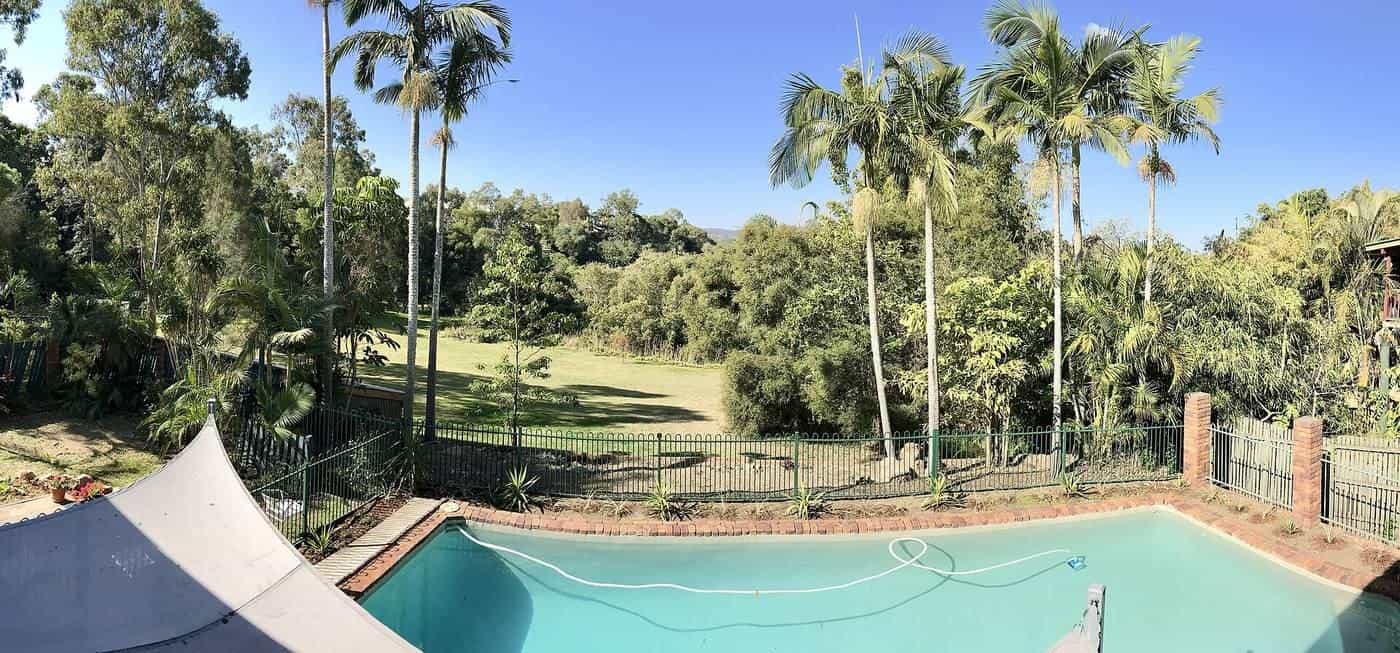
The barrier must generally be at least 1.2 metres high, measured from the finished ground level outside the pool area. Garden beds, retaining walls or pots built up against the fence can reduce the effective height, so measure from the highest point a child could stand on.
Gaps
- Under the fence: the gap between the bottom of the barrier and the ground must be small enough that a young child can't crawl under. AS 1926.1 limits this gap to 100 mm.
- Between vertical bars: gaps must also be no more than 100 mm, so a child can't squeeze through.
Climbable objects and the non-climbable zone
Children are good climbers. The standard requires a non-climbable zone of 900 mm around the outside of the barrier, and sets rules for horizontal rails, which must be spaced so they don't form a ladder. Keep chairs, barbecues, pot plants, trees, toys and pool equipment well away from the fence.
Gates
Pool gates are a common failure point. Under the standard, gates must:
- open outwards, away from the pool area;
- be self-closing from any open position, without having to be pushed;
- be self-latching, so the latch engages automatically every time;
- have the latch release mounted high enough or shielded so a small child can't reach or operate it.
Never prop a pool gate open, even for a moment.
Doors, windows and boundary fences
Older pools sometimes use the wall of the house, with doors or windows opening into the pool area, as part of the barrier. Rules for this vary widely between states and depend on when the pool was built. For many new pools, child-resistant doors opening directly into the pool area are no longer permitted. Windows that open into the pool area may need restrictors or security screens.
If a boundary fence forms part of your pool barrier, it must meet the same requirements on the pool side, including height and climbability. Talk to your neighbour and your council before changing a shared boundary fence.
Glass, aluminium and other materials
Common pool barrier materials include:
| Material | Pros | Things to check |
|---|---|---|
| Frameless glass | Clear views of the pool | Spigot heights, panel gaps, hinge and latch quality |
| Semi-framed glass | Views plus rails for strength | Rails must not create foot-holds |
| Aluminium tubular | Affordable and durable | Gaps between bars, corrosion near saltwater pools |
| Steel | Strong | Rust protection, especially near salt pools |
| Timber or masonry | Can blend with landscaping | Height, climbability and gaps as materials age |
Whatever you choose, the finished barrier must meet the standard and your state's rules. A product sold as "pool fencing" isn't automatically compliant once it's installed.
Registration and inspections
Several states require pools to be registered and barriers to be inspected or certified, for example when building a new pool, selling or leasing a property, or at regular intervals. These rules differ widely. Our pool rules by state guide summarises the main schemes and links to the official sources.
Keeping your barrier compliant
Barriers deteriorate. Hinges sag, latches stick, soil builds up and plants grow. Check your barrier regularly:
Monthly barrier check
0 of 8 done
Ticks are saved in this browser only.
Fix problems immediately. A gate that doesn't latch every time is a serious hazard.
Building or changing a barrier
New pools and barriers usually need a building permit or approval, and inspections during construction. Before you start:
- Check your state rules and talk to your council or a private building certifier.
- Use a licensed pool builder or fencing contractor familiar with AS 1926.1.
- Plan the pool area so the non-climbable zone, gates and equipment work together.
- Keep paperwork, including approvals, certificates and inspection reports.
Temporary fencing is normally required while a pool is being built and filled. Ask your builder how they will keep the site safe.
Key points
In most of Australia, pools and spas that can hold more than 300 mm of water need a compliant barrier, including many portable and inflatable pools. AS 1926.1 sets a minimum height of 1.2 metres, limits gaps, requires a non-climbable zone, and requires gates that open outwards and self-close and self-latch. State rules vary, especially for older pools, registration and inspections, so check with your council. Check your barrier monthly, and never rely on it instead of active supervision.
Related guides
Read pool rules by state, keeping kids safe around pools and CPR and first aid for pool owners.
Frequently asked questions
Which pools need a fence in Australia?
In general, swimming pools and spas capable of holding more than 300 mm of water need a compliant safety barrier. This includes many above-ground, portable and inflatable pools. Check your state government's rules for the exact definition.
How high does a pool fence need to be?
Under the Australian Standard for pool barriers, AS 1926.1, the barrier must generally be at least 1.2 metres high, measured from finished ground level. State laws reference this standard, sometimes with variations.
Can a house wall or door form part of the pool barrier?
Rules on using walls, doors and windows as part of a barrier vary between states and depend on when the pool was built. Many states no longer allow doors to open directly into a pool area for new pools. Check with your council or state regulator.
Do pool gates have to open outwards?
Yes. Pool gates must generally open outwards, away from the pool area, and be self-closing and self-latching from any position.
Does an inflatable pool need a fence?
If it can hold more than 300 mm of water, it is generally treated the same as a permanent pool and needs a compliant barrier. Many state governments and the ACCC warn about this.
Sources and further reading
Facts on this page were checked against these primary and official sources. Conditions change — confirm before you travel or buy.
- Swimming pool and spa barriers — Victorian Building Authority
- Swimming pool safety — NSW Government
- Pool safety — Queensland Building and Construction Commission
- Portable pools — Product Safety Australia
- Keep Watch — Royal Life Saving Society Australia