
Looking after a pool doesn't have to be complicated or expensive. Most of the work comes down to keeping a sanitiser working, keeping the water balanced, circulating and filtering properly, and avoiding waste of water, chemicals and energy. Get those right and you'll spend more time swimming and less time battling green water.
This section explains pool water chemistry in plain English, compares saltwater chlorinators with manual chlorine, and shows how covers, pumps and heating choices affect running costs. It doesn't recommend brands or publish typical bills, which vary widely. Instead, it gives you the principles and the questions to ask.
Guides in this section
- Pool water chemistry basics Sanitising with chlorine, pH, alkalinity, calcium hardness, stabiliser, testing, common problems and safe chemical storage.
- Saltwater vs chlorine pools How chlorinators work, salt levels, pros and cons, cell maintenance, mineral systems, corrosion and draining rules.
- Pool heating, pumps and running costs Covers, pump types and energy ratings, run times, solar, heat pump and gas heating, and saving water.
The weekly routine
A simple weekly routine keeps most pools in good shape:
- Skim and empty baskets in the skimmer and pump.
- Brush walls and floor to stop algae taking hold.
- Test sanitiser and pH, and adjust as the product labels direct.
- Check the filter pressure or condition and clean when needed.
- Check the water level and top up if needed.
- Look over equipment for leaks, noises or error lights.
In summer, during heavy use or after storms, you may need to test and adjust more often.
7.2–7.8
Common pH range
As noted by Wikipedia
Weekly
Routine
Skim, brush, test, adjust
13 11 26
Poisons line
For chemical exposures
Know your pool's volume
Almost every chemical dose depends on how many litres your pool holds. Use the pool calculator on our home page to estimate the volume of rectangle, oval and round pools, and to see how long your pump takes to turn the water over. Write the figure down and keep it with your test kit.
Equipment basics
| Equipment | What it does | Care |
|---|---|---|
| Pump | Circulates water | Keep the strainer basket clear; check for leaks and noise |
| Filter (sand, cartridge or glass media) | Removes particles | Backwash or clean as the manufacturer directs |
| Chlorinator (salt pools) | Generates chlorine | Check salt level; inspect and clean the cell |
| Heater | Warms water | Service as recommended; use a cover to retain heat |
| Cleaner | Vacuums the pool | Empty debris bags or baskets; check hoses |
Saving money and resources
- Use a pool cover to reduce evaporation, heat loss and debris.
- Run the pump efficiently, adjusting run times by season and considering a variable-speed pump when replacing.
- Keep water balanced so chemicals work properly and equipment lasts.
- Fix leaks quickly.
- Don't drain to stormwater; check local rules for draining and backwashing.
When to call a professional
Call a qualified pool technician or service if water problems persist after testing and adjusting, if equipment is leaking, noisy or failing, if you suspect a leak in the shell or plumbing, or if electrical or gas equipment needs work. Use licensed electricians, plumbers and gas fitters for any installation or repair.
Seasonal tips
- Spring: service equipment, clean the filter, rebalance water and check the barrier before the season starts.
- Summer: test more often, run the pump longer and use a cover to retain heat and reduce evaporation.
- Autumn: clear falling leaves regularly and adjust run times as the weather cools.
- Winter: keep circulating and sanitising at lower levels as advised, and keep the cover on.
Common mistakes
- Dosing chemicals without knowing the pool volume.
- Adjusting several readings at once instead of one at a time.
- Neglecting pH in salt pools.
- Running the pump for the same hours all year.
- Leaving the pool uncovered when it's heated.
Questions to ask a pool shop or technician
- What does my water test show, and what should I adjust first?
- Is my pump the right size for my pool and filter?
- How often should I clean or backwash my filter?
- Is my chlorinator cell scaled or worn?
- What are the local rules for draining or backwashing?
Write down the advice and record the results in a logbook so you can track changes over time.
Pool care for renters and holiday homes
If you rent a home with a pool, check your lease to see who is responsible for chemicals, cleaning and equipment repairs, and report any faults in writing. For holiday homes and pools that sit unused for weeks, a cover, an automatic chlorinator and a timer help keep the water stable, but arrange regular checks so problems don't build up while you're away.
Key points
Keep a sanitiser working, keep the water balanced and test regularly. Salt pools are chlorine pools that need pH and cell care. Know your pool's volume for accurate dosing. Covers, efficient pumps and sensible heating choices cut running costs. Handle chemicals safely and call a professional when problems persist.
Guides in this section
Pool care
Pool water chemistry basics for home owners
A plain-English guide to home pool water: chlorine and sanitising, pH, alkalinity, calcium hardness, stabiliser, testing, shocking and safe chemical handling.
Read · 5 min

Pool care
Saltwater vs chlorine pools: what's the difference?
How saltwater chlorinators work, how salt pools compare with manually chlorinated pools, mineral and magnesium systems, maintenance, corrosion and draining rules.
Read · 5 min
Pool care
Pool heating, pumps and running costs
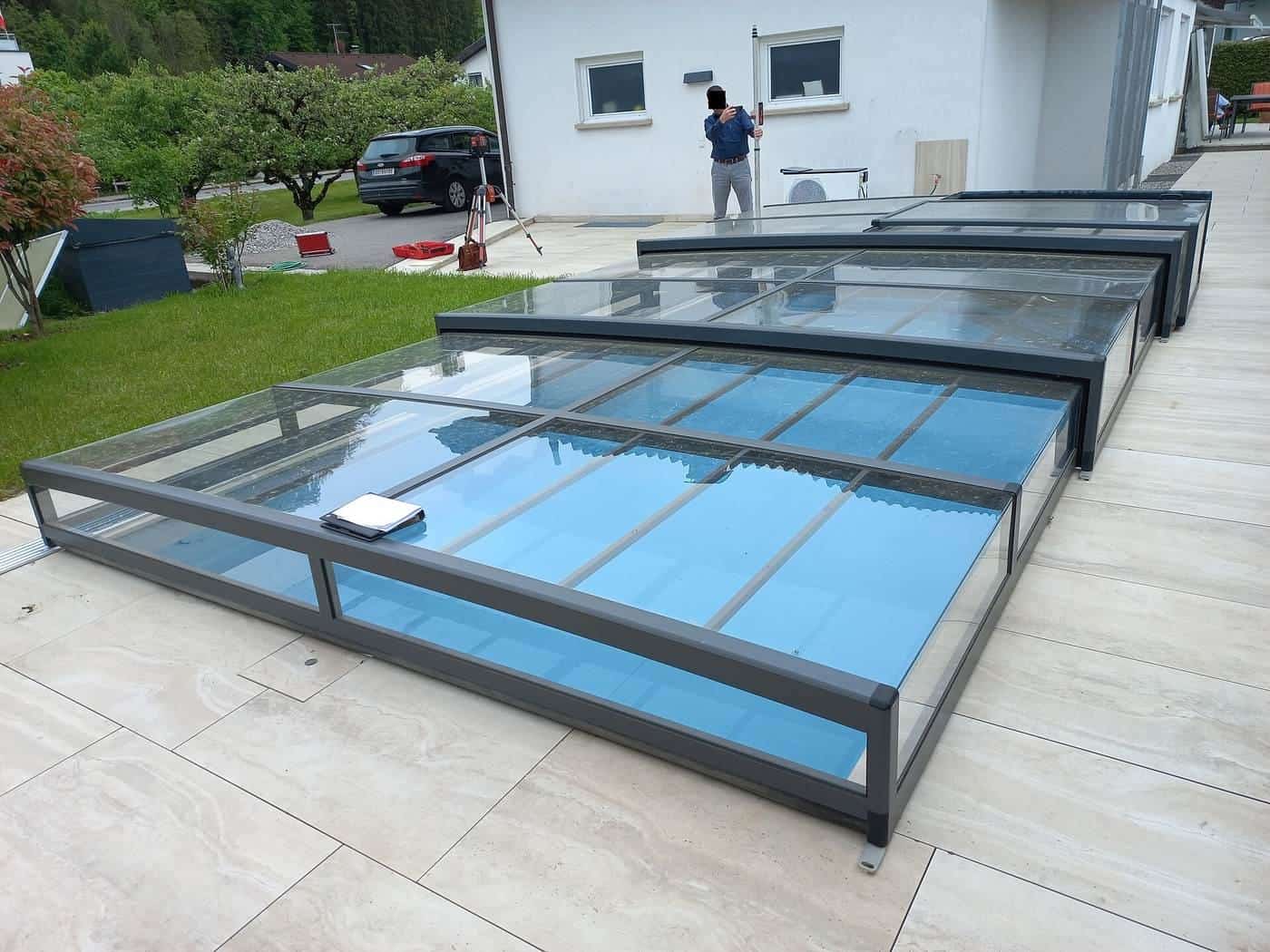
How to keep pool running costs down in Australia: pool covers, efficient and variable-speed pumps, run times, solar, heat pump and gas heating, and water use.
Read · 5 min
Frequently asked questions
How often should I test my pool?
Many owners test sanitiser and pH at least weekly, and more often in hot weather, after heavy use or after rain.
Are salt pools chlorine-free?
No. A saltwater chlorinator makes chlorine from salt by electrolysis. Salt pools are chlorine pools with on-site chlorine generation.
What's the easiest way to reduce pool running costs?
A pool cover reduces evaporation, heat loss and debris. An efficient, correctly sized pump with sensible run times also helps.
How do I work out my pool's volume?
Multiply the surface area by the average depth. Our pool calculator does this for rectangle, oval and round pools and estimates turnover time.
Is it safe to store pool chemicals in the shed?
It can be, if they are kept in original containers, in a cool, dry, ventilated place, separated from each other as labelled, and locked away from children.
Sources and further reading
Facts on this page were checked against these primary and official sources. Conditions change — confirm before you travel or buy.
- Swimming pool sanitation — Wikipedia
- Salt water chlorination — Wikipedia
- Pool pumps — Energy Rating
- Swimming pools — energy.gov.au
- Poisons Information Centre — healthdirect