Walk around Australian suburbs and you'll see pool surrounds in sandstone, travertine, bluestone, concrete pavers, exposed aggregate and porcelain tiles. Hard paving is popular because it's durable, easy to clean and can look stunning. But not every paver suits a pool. The wrong choice can be slippery, too hot to walk on, prone to salt damage or a constant cleaning job.
This guide explains the main paving materials, how slip resistance is measured in Australia, and what to consider for heat, salt, sealing and drainage. It's general information to help you ask the right questions of suppliers and installers.
Slip resistance first
The most important property of any pool surround is grip when wet. In Australia, slip resistance is classified under AS 4586. The wet pendulum test gives a classification from P0 to P5, with higher numbers meaning more slip resistance in wet conditions. Other tests, such as ramp tests for barefoot areas, may also be reported.
For pool surrounds, higher wet slip resistance ratings are commonly recommended. When comparing products:
- ask for the test certificate for the specific product and finish, not just the range;
- remember that polished or honed finishes are often more slippery than textured ones;
- consider that sealers, algae, sunscreen and dirt can reduce grip over time.
Safe Work Australia notes that slips, trips and falls are a common cause of injury. While its guidance focuses on workplaces, the principles of choosing appropriate surfaces and keeping them clean apply at home too.
P0–P5
Wet pendulum classes
Under AS 4586
Lighter
Cooler underfoot
Generally absorbs less heat
Seal?
Ask the supplier
Some sealers reduce grip
Common paving materials
| Material | Strengths | Things to check |
|---|---|---|
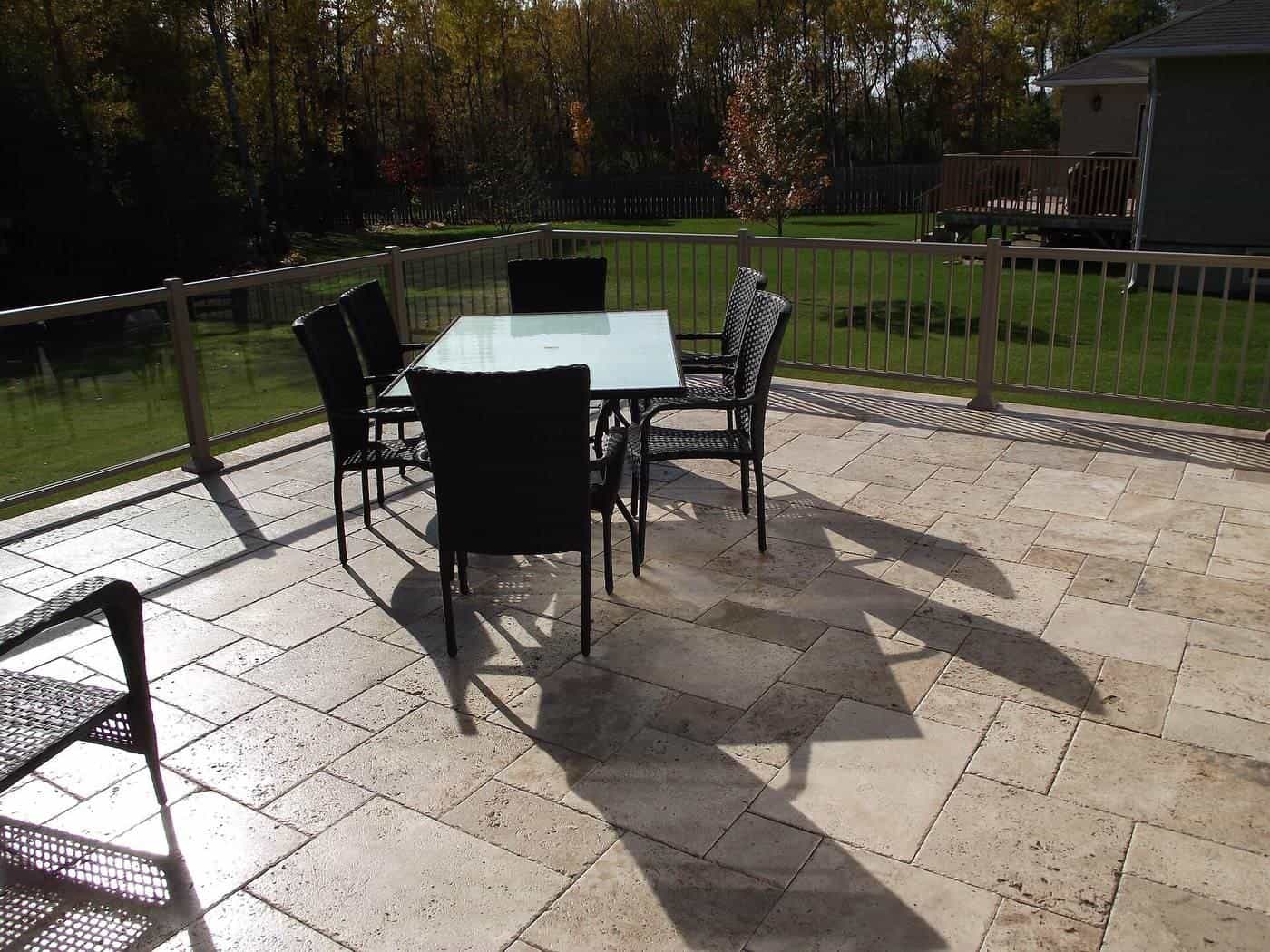
| Travertine | Popular, natural look, available in light colours | Finish (tumbled or textured gives grip), sealing, salt suitability |
| Sandstone | Warm natural tones, textured surface | Porosity, staining, sealing, salt resistance |
| Bluestone and basalt | Striking dark colour, dense | Can get hot in direct sun; finish affects grip |
| Granite | Hard-wearing | Finish matters: flamed or textured for grip |
| Concrete pavers | Affordable, many styles | Quality, colour fade, slip rating |
| Exposed aggregate or broom-finished concrete | Good grip, continuous surface | Cracking, joint placement, can be rough on feet |
| Porcelain pavers | Dense, low absorption, consistent | Choose external, slip-rated textures |
Heat underfoot
Australian summer sun can make dark paving painfully hot. To keep surrounds comfortable:
- choose lighter colours, which generally absorb less heat;
- test samples by leaving them in the sun and feeling them in the afternoon;
- add shade with trees (away from the fence), sails or pergolas;
- consider planting and lawn areas to break up large paved spaces.
Salt and chemicals
Saltwater pools are common in Australia. Salt splashing onto paving can, over time, cause problems such as surface flaking in some porous stones and concrete, and staining or deterioration of grout. To reduce risk:
- choose materials recommended by the supplier for saltwater pools;
- use an appropriate penetrating sealer if recommended;
- rinse surrounds with fresh water regularly;
- fix drainage so water doesn't pool on pavers.
Our guide to saltwater versus chlorine pools explains the differences between pool types.
Coping
Coping is the edge around the top of the pool shell. It needs to be comfortable to sit on, safe to walk on and durable. Bullnose or rounded edges are popular for comfort. Many owners match the coping to the surrounding paving for a seamless look. Make sure coping is securely bedded, because loose coping can be dangerous.
Sealing
Sealers can help protect natural stone and concrete from staining, salt and moisture. But not all sealers suit pool surrounds:
- Penetrating sealers soak into the material and are often preferred because they change the surface less.
- Topical sealers form a film on the surface and can make paving more slippery when wet.
Ask your supplier which sealer they recommend for your material in a pool setting, how often to reapply, and whether it affects slip resistance.
Drainage and falls
Good drainage keeps paving safe and protects your house and pool. Surrounds should be laid with a fall that carries water away from the pool and house to drains. Avoid low spots where water puddles, which encourages algae and slipping. If your pool surround drains towards the pool, ask a professional whether that suits your pool type and local rules.
Pool safety considerations
Pavers and garden features can affect your pool barrier. Retaining walls, raised planters and paving levels near the fence can reduce the effective fence height or create climbable objects within the non-climbable zone. Plan your surround with the barrier rules in mind. See our pool fencing guide.
Pool paving checklist
0 of 8 done
Ticks are saved in this browser only.
Questions to ask before you buy
- What is the wet slip resistance classification of this product and finish under AS 4586?
- Is it suitable for salt pools, and does the warranty cover salt damage?
- How hot does it get in direct sun?
- Does it need sealing, and which sealers keep slip resistance?
- What coping options match, and are bullnose edges available?
- How should it be laid for drainage near the pool?
Ask your installer about falls and drainage, and get written quotes.
Common mistakes
- Choosing polished indoor tiles for a wet outdoor area.
- Using a sealer that leaves a slippery film.
- Ignoring drainage, so water ponds near the house.
- Laying pavers that raise the ground level beside the pool fence.
Living with your choice
Every paving material changes over time. Natural stone weathers and may develop a patina, concrete can fade, and grout can stain. Keep a few spare pavers from the same batch for future repairs, because colours vary between production runs and can be hard to match years later.
Key points
Choose pool paving for wet slip resistance first: ask for AS 4586 results for the specific finish, where higher P ratings mean more grip. Lighter colours stay cooler. Choose materials suited to saltwater if you have a salt pool, use the right sealer, rinse surrounds and ensure good drainage. Keep surfaces clean, and make sure paving and garden features don't compromise your pool barrier.
Related guides
Read timber and composite pool decking, pool deck maintenance and saltwater versus chlorine pools.
Frequently asked questions
What is the safest paving around a pool?
Choose paving with a high wet slip resistance classification tested to AS 4586, suitable for wet barefoot areas, and keep it clean. Texture, finish and maintenance all affect how slippery a surface is.
What do P ratings mean?
P ratings, from P0 to P5, are wet pendulum test classifications under AS 4586. Higher numbers indicate greater slip resistance in wet conditions. Ask suppliers for test results for the specific product and finish.
Which pavers stay cooler in the sun?
Lighter-coloured pavers generally absorb less heat than dark ones. Some natural stones are often described as staying relatively cool, but performance varies. Test samples in the sun before you buy.
Do salt pools damage pavers?
Salt can affect some natural stones, concrete and grout over time. Choose materials suited to saltwater pools, use an appropriate sealer where recommended, and rinse surrounds regularly.
Should pool pavers be sealed?
Many natural stone and concrete pavers benefit from a penetrating sealer to reduce staining and salt damage, but some sealers can reduce slip resistance. Follow the supplier's advice and choose a sealer suitable for pool surrounds.
Sources and further reading
Facts on this page were checked against these primary and official sources. Conditions change — confirm before you travel or buy.
- Slip resistance classification (AS 4586) — Standards Australia
- Slips, trips and falls — Safe Work Australia
- Travertine — Wikipedia
- Porcelain tile — Wikipedia
- Swimming pools and spas — Victorian Building Authority